(EP stimulation protocol) EP study에서 extrastimulus protocol을 사용할 때 다음과 같은 표기를 사용합니다.
기본 구조 S1 – S2 – S3 – S4
| S1 | 기본 pacing stimulus (drive train) |
| S2 | 첫 번째 premature extrastimulus |
| S3 | 두 번째 premature extrastimulus |
| S4 | 세 번째 premature extrastimulus |
즉,
- S1 = 기본 pacing
- S2 = 첫 premature beat
- S3 = 두 번째 premature beat
예시 (시험에서 자주 나오는 형태) 예를 들어
S1S1 = 600 ms → 기본 pacing cycle length
S1S2 = 350 ms → S2가 첫 premature stimulus
💡 CCDS 시험 포인트
시험에서는 보통 이렇게 물어봅니다.
- S1 = drive train
- S2 = first extrastimulus
- S3 = second extrastimulus
이건 EP stimulation protocol 기본 용어라 거의 암기 문제입니다.
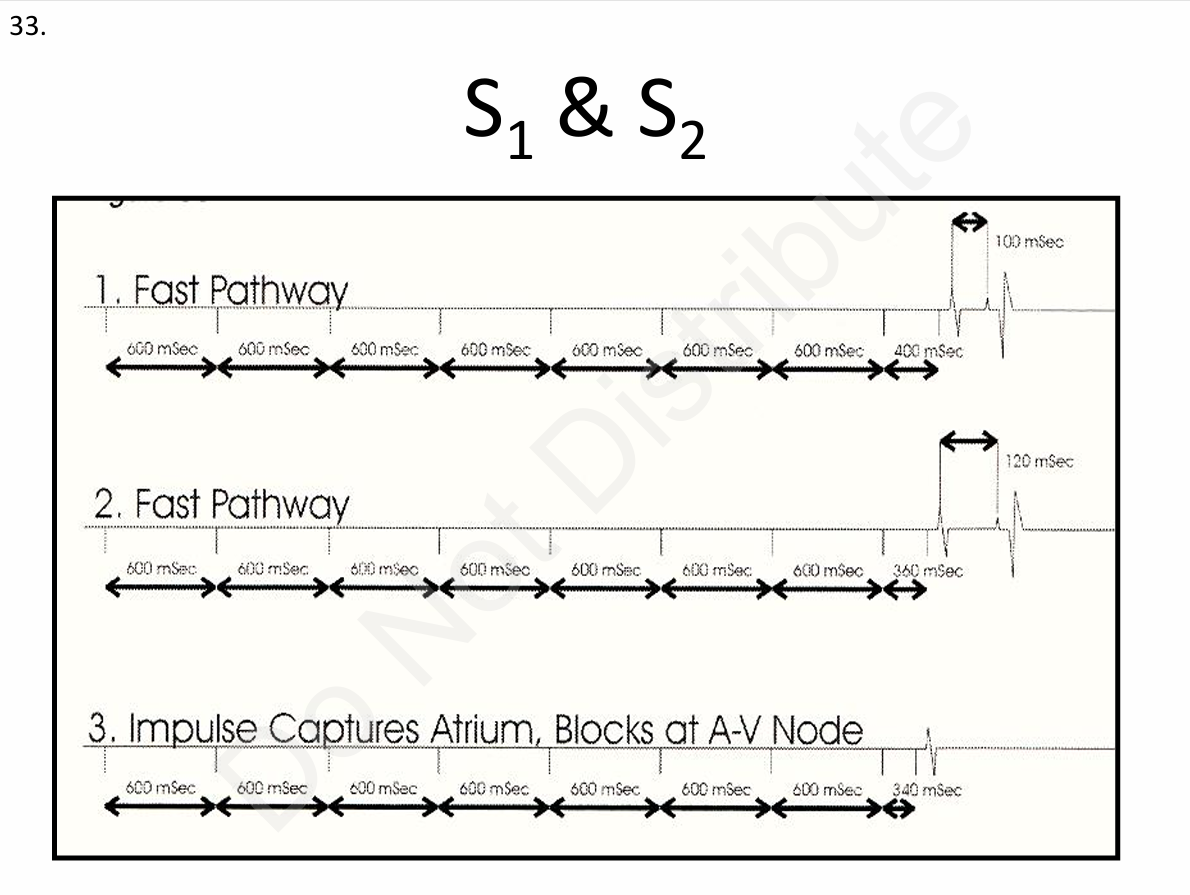
이 슬라이드는 EP study에서 S1–S2 extrastimulus protocol을 설명하는 그림입니다. (AV node refractory period 찾는 과정)
핵심은 S1 drive train + S2 premature beat가 AV node에서 어떻게 전도되는지를 보는 것입니다.
1️⃣ 기본 구조 (S1 & S2)
S1
- 기본 pacing stimulus
- 보통 600 ms cycle length
- 여러 번 반복 (drive train)
S2
- 첫 premature stimulus
- S1보다 점점 더 짧은 coupling interval로 줌
첫 번째 줄
S1 = 600 ms 반복
S2 = 400 ms
결과 → fast pathway 통해 AV node 전도
그래서 A-H interval ≈ 100 ms
3️⃣ 슬라이드 ② S2 더 빨라짐
두 번째 줄
S2 = 360 ms
fast pathway refractory에 가까워짐 그래서
A-H interval 증가 120 ms
즉 ✔ decremental conduction
AV node 특징
더 빠르게 자극 → conduction delay 증가
4️⃣ 슬라이드 ③ S2 더 빨라짐
세 번째 줄 S2 = 340 ms 결과 Atrial capture but AV node block
즉 ✔ AV nodal ERP (effective refractory period) 도달
🔑 이 슬라이드 핵심 S2를 점점 줄이면
S2 interval결과
| 400 ms | 정상 전도 |
| 360 ms | conduction delay |
| 340 ms | AV node block |
즉 AV node refractory period 측정
이 슬라이드에서 나오는 EP 시험 핵심
- AV nodal ERP
- Fast vs slow pathway
- A-H jump
- AVNRT induction
(이 슬라이드는 사실 AVNRT 설명 슬라이드라 시험에 자주 나옵니다.)
CCDS 시험에서 진짜 많이 나오는
- S1S2S3 protocol
- AVNRT induction
- A-H jump
- fast-slow pathway
'CCDS EXAM' 카테고리의 다른 글
| CIED 배터리(CCDS EXAM) (0) | 2026.04.10 |
|---|---|
| Secondary Causes of Conduction Disease(전도 질환의 이차적 원인) (0) | 2026.03.31 |
| [CCDS EXAM] 약물 (0) | 2026.03.04 |
| [CCDS EXAM] 개념정리 Cathode anode (0) | 2026.03.03 |
| [CCDS EXAM] Reentry Tachycardia Substrate 29 (0) | 2026.03.03 |
